In 2026, businesses spend heavily on digital advertising but still struggle to achieve consistent ROI. One of the most common reasons is the confusion between two essential components of digital growth: ads and funnels.
Many marketers assume better ads automatically lead to better results. Others believe a strong funnel alone is enough. In reality, neither works in isolation. ROI is generated when both systems work together in a structured, data-driven environment.
This guide explains the real difference between funnels and ads, how they influence performance, and what actually drives profitable growth.
1. Understanding Ads in Modern Marketing
Ads are the traffic engine of digital marketing. They bring users from platforms like Google, Meta, LinkedIn, and YouTube into your business ecosystem.
The primary purpose of ads is:
- Attract attention
- Generate traffic
- Target specific audiences
- Create awareness
- Drive clicks
However, ads alone do not guarantee revenue. They only control the top of the customer journey.
Businesses often partner with a professional performance marketing agency to ensure ad campaigns are structured for quality traffic, better targeting, and improved conversion potential.
2. Understanding Funnels in Digital Growth
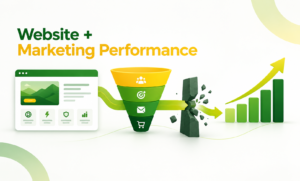
A marketing funnel is a step-by-step customer journey framework that guides a potential user from first discovering a brand to eventually making a purchase or taking a desired action.
A typical funnel includes:
- Awareness stage (discovery)
- Consideration stage (evaluation)
- Conversion stage (purchase or lead)
- Retention stage (repeat engagement)
Unlike ads, funnels focus on behavior, messaging, and conversion psychology rather than traffic generation.
3. Ads vs Funnel: The Real Difference
The key difference is simple:
- Ads bring traffic
- Funnels convert traffic
Ads create opportunities, while funnels turn those opportunities into revenue.
This dependency is why modern marketing requires both systems working together.
4. Why Ads Alone Fail to Deliver ROI

Many businesses increase ad spend expecting proportional revenue growth but fail to see results. This usually happens due to weak post-click experiences.
Common issues include:
- Poor landing page experience
- Weak messaging alignment
- Low-quality targeting
- Missing conversion tracking
- No retargeting strategy
Brands working with an ecommerce marketing agency often realize that improving funnel structure leads to higher conversions without increasing advertising budgets.
5. Why Funnels Alone Cannot Scale Growth
Even the best funnel cannot generate results without consistent traffic. A funnel is only effective when users actively enter it.
Without ads, businesses face:
- Low traffic volume
- Limited testing data
- Slow growth cycles
- Reduced scalability
Ads provide the fuel required for funnel performance and optimization.
6. How Ads and Funnels Work Together

High-performing businesses treat ads and funnels as a single integrated system rather than separate strategies.
Their interaction works like this:
- Ads attract targeted users
- Funnels guide decision-making
- Landing pages convert users
- Retargeting re-engages lost visitors
- Data improves optimization
This ecosystem ensures consistent improvement in conversion rates and ROI.
7. Importance of Audience Quality in ROI
ROI is heavily influenced by traffic quality. Even the most well-designed funnel will struggle to generate results if the audience entering it has no real interest or intent to buy.
Modern targeting includes:
- Intent-based segmentation
- Behavioral targeting
- Lookalike audiences
- Retargeting pools
Businesses often collaborate with a specialized Google Ads lead generation agency to improve audience precision and generate high-intent leads from search campaigns.
8. Funnel Optimization and Conversion Efficiency
Funnels are responsible for converting interest into action. Small improvements in funnel structure can significantly impact ROI.
Key optimization areas include:
- Clear value proposition
- Fast-loading landing pages
- Strong CTA placement
- Trust signals (reviews, testimonials)
- Reduced friction in forms
A well-optimized funnel ensures that traffic generated by ads does not get wasted.
9. Role of Data in Connecting Ads and Funnels
Data is the bridge that connects ads and funnels. Without accurate tracking, optimization becomes guesswork.
Key metrics include:
- Cost per acquisition (CPA)
- Return on ad spend (ROAS)
- Conversion rate
- Drop-off points
- Customer journey flow
Companies rely on a trusted B2B lead generation company to analyze performance data and improve both acquisition and funnel efficiency.
10. ROI Comes from Systems, Not Channels
A common misconception is that ROI comes from better ads alone. In reality, ROI is the result of a complete system working together.
A high-performing system includes:
- Targeted ads
- Optimized funnels
- Conversion tracking
- Retargeting campaigns
- Continuous testing
Without system integration, even high ad spend leads to poor returns.
11. Conversion-Focused Marketing Strategy

Modern marketing prioritizes conversions over traffic. Businesses must focus on turning visitors into customers efficiently.
This includes:
- Strong messaging alignment
- Clear user journey design
- Optimized landing pages
- Behavioral targeting
Many businesses partner with an ROI-focused marketing agency to ensure their campaigns are optimized for measurable results like conversions, revenue, and overall business growth rather than just impressions or clicks.
12. Funnel Psychology and User Behavior
Funnels are built on understanding how users make decisions. Most users do not convert immediately and require multiple touchpoints.
Decision stages include:
- Awareness
- Interest
- Evaluation
- Purchase
Effective funnels address each stage with the right messaging and timing.
13. Ads Strategy for eCommerce Growth

For eCommerce businesses, ads are essential for driving product discovery and sales. However, without a strong funnel, ad performance declines over time.
Effective strategies include:
- Product-focused ads
- Dynamic remarketing
- Seasonal campaigns
- Conversion tracking
Brands often collaborate with an ecommerce marketing agency to scale eCommerce revenue through structured funnel systems and optimized advertising.
14. When to Work with Experts
Managing ads and funnels requires technical expertise, strategic thinking, and continuous optimization. Most businesses struggle to scale without expert support.
Many organizations choose to hire performance marketing agency professionals to build integrated systems that improve ROI and reduce wasted ad spend.
FAQs
1. What is the main difference between funnels and ads?
Ads are used to bring traffic to your business, while funnels are designed to convert that traffic into leads or customers.
2. Which is more important for ROI: ads or funnels?
Neither works alone. ROI is generated when ads and funnels work together as a complete system.
3. Why do ads fail even with a good budget?
Ads often fail due to weak landing pages, poor targeting, unclear messaging, or lack of funnel optimization.
4. Can a funnel work without ads?
A funnel needs traffic to function. Without ads or other traffic sources, even a strong funnel will not generate results.
5. What role does targeting play in ROI?
Targeting ensures your ads reach the right audience, which improves conversion rates and reduces wasted ad spend.
6. How does retargeting improve conversions?
Retargeting brings back users who previously interacted with your website or ads, increasing the chances of conversion.
7. What is a conversion-focused funnel?
A conversion-focused funnel is designed to guide users smoothly from awareness to purchase with minimal friction.
8. How important is landing page optimization?
Landing pages are critical because they directly influence whether visitors convert into leads or customers.
9. Do small businesses need funnels and ads together?
Yes, even small businesses need both to scale efficiently and maximize return on marketing spend.
10. How can businesses improve ROI from ads and funnels?
Businesses can improve ROI by combining better targeting, optimized funnels, strong creatives, and continuous data-driven optimization.
Conclusion
Ads and funnels are not competing strategies—they are interconnected systems. Ads generate traffic, while funnels convert that traffic into revenue. When combined with strong data tracking and continuous optimization, they create a scalable growth engine.
Businesses that treat marketing as a system rather than isolated campaigns consistently achieve higher ROI, better conversion rates, and sustainable growth.
If you want to improve your advertising performance and build a high-converting funnel system, contact us today.