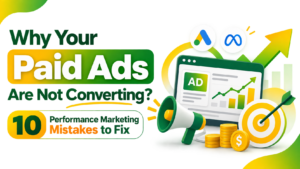
Digital advertising has become more competitive than ever in 2026. Businesses invest heavily in paid campaigns expecting strong leads, sales, and customer growth, yet many ads fail to deliver meaningful conversions. While impressions and clicks may increase, poor strategy, weak targeting, and low-quality user experiences often prevent campaigns from generating real business results.
Successful advertising now depends on audience understanding, conversion-focused landing pages, data analysis, creative optimization, and accurate tracking systems. Businesses that continuously optimize these areas are more likely to improve conversion rates and maximize advertising ROI.
This guide explains the most common reasons ads fail to convert and how businesses can improve campaign performance with modern digital marketing strategies.
1. Targeting the Wrong Audience

One of the biggest reasons advertising campaigns underperform is inaccurate audience targeting. Even strong creatives and compelling offers will struggle if they reach users who are not genuinely interested in the product or service.
Businesses should analyze:
- Customer demographics
- Search behavior
- Audience interests
- Purchase intent
- Device usage patterns
Brands often work with a professional performance marketing agency to improve audience targeting and optimize campaigns based on real customer behavior and conversion data.
2. Weak Ad Messaging
Clear messaging is essential for high-performing ads. Generic headlines and unclear value propositions fail to capture attention or communicate why users should take action.
Strong advertising copy should:
- Address customer pain points
- Highlight key benefits
- Include clear CTAs
- Match search intent
- Create urgency naturally
Businesses that regularly test ad messaging often achieve stronger engagement and better conversion performance.
3. Poor Landing Page Experience

A high-performing advertisement can still fail if the landing page experience is weak. Users expect fast-loading, mobile-friendly pages that clearly explain the offer and guide them toward conversion.
Common landing page problems include:
- Slow loading speed
- Confusing layouts
- Weak call-to-action buttons
- Poor mobile optimization
- Lack of trust indicators
Businesses operating as an ecommerce marketing agency frequently prioritize landing page optimization because website performance directly affects online sales and conversion rates.
4. Ignoring Mobile Optimization
Most digital traffic now comes from smartphones, making mobile optimization essential for successful advertising campaigns. Ads may generate clicks, but poor mobile experiences often result in high bounce rates and abandoned sessions.
Businesses should ensure:
- Responsive mobile layouts
- Fast page speed
- Easy navigation
- Optimized forms
- Clickable buttons
Improving mobile usability enhances engagement and increases the likelihood of conversions.
5. Inaccurate Conversion Tracking

Without proper tracking systems, businesses struggle to understand campaign performance accurately. Data-driven advertising requires detailed insights into user behavior, conversions, and acquisition costs.
Important metrics include:
- Conversion rate
- Cost per lead
- Return on ad spend
- Click-through rate
- Customer acquisition cost
Many businesses partner with a specialized Google Ads lead generation agency to improve tracking accuracy, optimize campaigns, and generate higher-quality leads.
6. Choosing the Wrong Advertising Platform
Different advertising platforms serve different business goals. Selecting the wrong platform often results in low engagement and poor conversion quality.
For example:
- LinkedIn performs well for B2B campaigns
- Instagram and Meta Ads are effective for D2C brands
- Google Search Ads work well for high-intent users
- YouTube supports awareness-focused campaigns
Understanding audience behavior helps businesses allocate advertising budgets more effectively.
7. Lack of Trust and Credibility
Modern consumers carefully evaluate brands before making purchasing decisions. Ads and landing pages that appear unprofessional or lack trust indicators often experience low conversion rates.
Businesses should include:
- Customer testimonials
- Reviews
- Case studies
- Secure payment systems
- Professional branding
Many online brands collaborate with a specialized D2C marketing agency to strengthen brand positioning, improve customer trust, and optimize customer acquisition strategies.
8. Not Testing Campaign Creatives

Advertising trends and user preferences change continuously. Businesses that rely on the same creatives for long periods often experience declining campaign performance.
Important testing areas include:
- Headlines
- Visual designs
- Video formats
- CTA placement
- Audience variations
Regular creative testing helps businesses identify higher-performing combinations and improve advertising efficiency.
9. Poor Keyword Targeting

Keyword strategy strongly influences campaign quality, especially in search advertising. Broad or irrelevant keywords often attract low-intent users who are unlikely to convert.
Businesses should focus on:
- Intent-based keywords
- Long-tail search terms
- Negative keywords
- Search relevance
Organizations frequently work with a trusted B2B lead generation company to improve keyword targeting, lead quality, and search-based acquisition strategies.
10. No Retargeting Strategy
Most users do not convert during their first interaction with a business. Retargeting campaigns help businesses reconnect with previous visitors and improve conversion opportunities.
Retargeting supports:
- Brand recall
- Customer engagement
- Lead nurturing
- Cart recovery
- Conversion optimization
Businesses that implement retargeting strategies often improve conversion rates significantly over time.
11. Prioritizing Clicks Over Business Results
High impressions and clicks do not automatically indicate campaign success. Businesses should focus on measurable outcomes such as qualified leads, revenue growth, and customer acquisition quality.
Important performance indicators include:
- Lead quality
- Sales conversions
- Revenue growth
- Return on investment
- Customer retention
Many businesses work with an experienced ROI driven marketing agency to improve campaign performance through analytics, optimization, and conversion-focused marketing strategies.
12. Weak Value Proposition
A strong advertising campaign still requires a compelling offer. Users need clear reasons to choose a product or service over competing alternatives.
An effective value proposition should explain:
- What problem the product solves
- Why it is valuable
- How it differs from competitors
- Why users should take action
Clear communication improves customer trust and increases conversion potential.
13. Lack of Data-Driven Optimization

Modern advertising requires continuous optimization based on real performance data. Businesses should regularly analyze user behavior and campaign metrics to identify opportunities for improvement.
Important analysis areas include:
- Audience performance
- Device behavior
- Geographic performance
- Funnel drop-off points
- Conversion paths
Many companies hire performance marketing agency professionals who specialize in analytics, attribution modeling, and conversion optimization.
14. Importance of SEO and Paid Ads Together
SEO and paid advertising are more effective when combined strategically. Paid campaigns provide immediate visibility, while SEO supports long-term organic traffic growth and authority building.
Businesses integrating SEO with advertising strategies often achieve:
- Better customer targeting
- Improved visibility
- Lower acquisition costs
- Sustainable growth
Startups and growing brands frequently search for the best digital marketing agency for D2C growth strategies that combine SEO, paid advertising, and performance marketing effectively.
15. Local Lead Generation Challenges

Location-based businesses require highly targeted advertising strategies to attract nearby customers effectively. Industries such as real estate, healthcare, and home services depend heavily on local visibility and qualified leads.
Important local advertising strategies include:
- Geographic targeting
- Location-specific landing pages
- Mobile optimization
- Customer reviews
- Local keyword targeting
Many businesses partner with a professional lead generation agency for real estate to improve local lead quality and strengthen customer acquisition campaigns.
FAQs
1. Why are my ads getting clicks but no conversions?
This usually happens because of poor audience targeting, weak landing pages, unclear offers, or irrelevant traffic reaching your website.
2. How important is audience targeting in advertising?
Audience targeting is one of the most important factors in campaign success because reaching the wrong users increases costs and reduces conversion rates.
3. Why does landing page optimization matter for conversions?
A fast, user-friendly, and well-structured landing page improves user experience and encourages visitors to take action.
4. What is conversion tracking in digital advertising?
Conversion tracking helps businesses measure important actions such as purchases, form submissions, and leads generated from advertising campaigns.
5. Why are mobile-friendly ads important in 2026?
Most users now browse and shop through mobile devices, making mobile optimization essential for improving engagement and conversions.
6. What is retargeting and why is it useful?
Retargeting helps businesses reconnect with users who previously visited their website or interacted with ads, increasing conversion opportunities.
Conclusion
Ads fail to convert for many reasons, including weak targeting, poor landing pages, ineffective messaging, and limited optimization strategies. In 2026, successful advertising requires continuous testing, audience analysis, conversion tracking, and strong user experiences.
Businesses that focus on customer intent, performance optimization, and measurable outcomes are more likely to improve conversion rates and generate sustainable growth from paid campaigns.
Whether you run an eCommerce business, SaaS company, D2C brand, or local service business, improving your advertising strategy can significantly increase lead quality and overall marketing performance.
If you want to improve your campaign performance with data-driven advertising and conversion-focused digital strategies, contact us today.