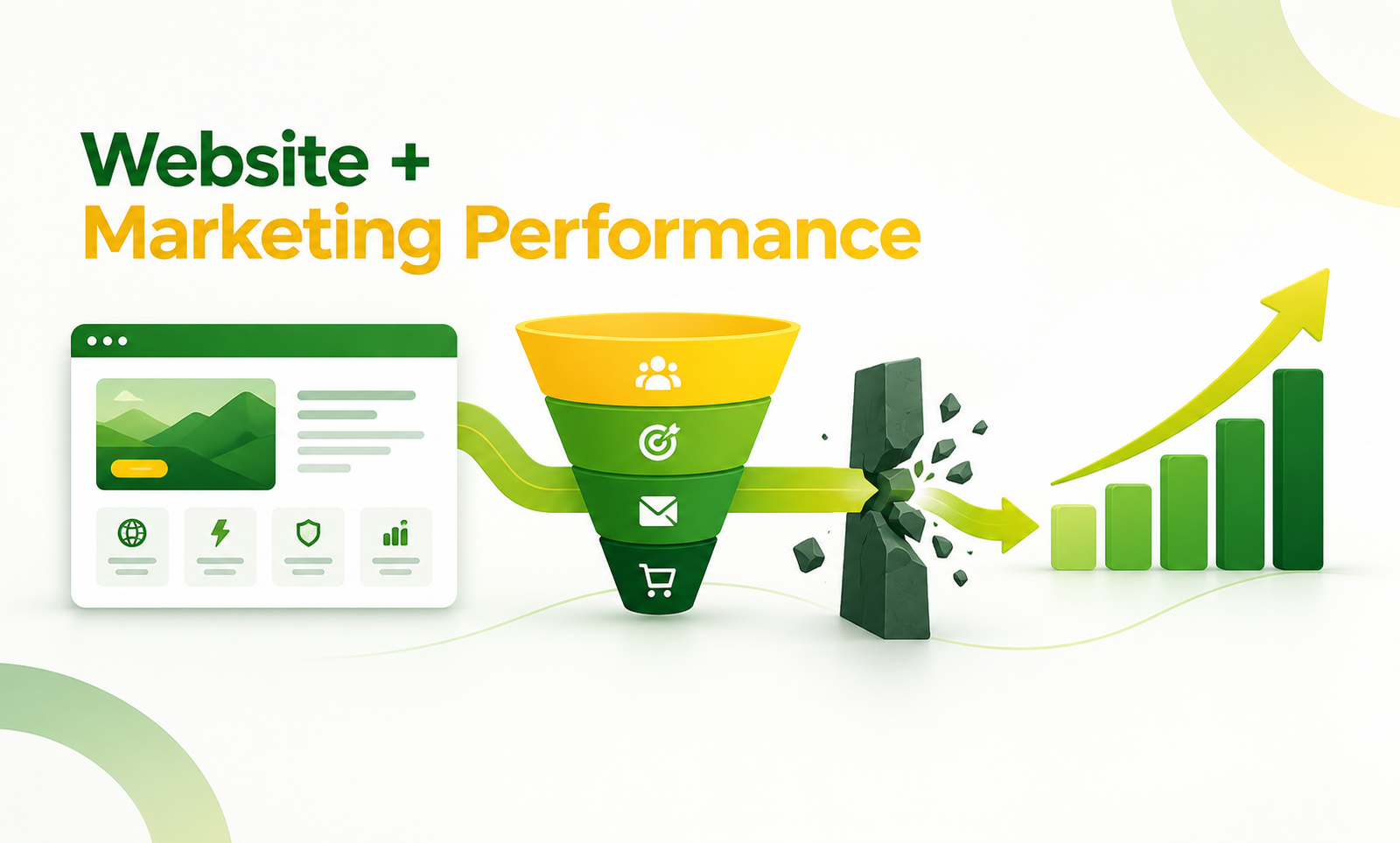
You can have a strong marketing strategy, well-targeted advertising campaigns and high-quality content, but if your website is not performing properly, your marketing results can still suffer.
Businesses often focus heavily on generating traffic through SEO, Google Ads, Meta Ads, social media and content marketing. However, getting people to your website is only the first step. Once visitors arrive, your website needs to convince them to take the next action.
If your website is slow, difficult to navigate, unclear or poorly optimised for conversions, you could be losing potential customers while continuing to spend money on acquiring traffic.
This means your website is not just a digital presence. It is a critical part of your marketing and revenue engine.
In this guide, we explore the most common ways a website can limit marketing performance and the practical steps businesses can take to fix them.
The Connection Between Your Website and Marketing Performance
Think of your marketing funnel as a journey:
Ad or search result → Website → Engagement → Conversion → Customer → Repeat Customer
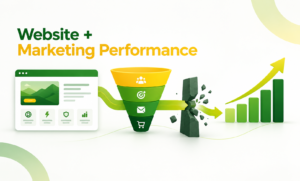
Your marketing campaigns bring people into the funnel, but your website is responsible for moving them towards conversion.
For example, imagine you spend £5,000 on paid advertising and generate 5,000 website visitors.
If your website converts only 1% of those visitors, you generate:
5,000 × 1% = 50 conversions
If improvements increase your conversion rate to 2%, the same traffic generates:
5,000 × 2% = 100 conversions
You have doubled your conversions without doubling your advertising budget.
This is why website optimisation can have a direct impact on Customer Acquisition Cost (CAC), conversion rates and return on marketing investment.
1. Your Website Loads Too Slowly
Website speed is one of the first areas businesses should investigate when marketing performance is weak.
Visitors expect websites to load quickly. If a page takes too long to load, users may leave before seeing your offer, product or service.
Slow websites can affect:
* User experience
* Engagement
* Conversion rates
* Paid advertising performance
* Mobile users
* Organic search performance
* Revenue
A slow website is particularly problematic when you are paying for traffic.
Imagine paying for a Google or Meta ad click and then losing the visitor because the landing page takes too long to load.
How to Fix It
Start by reviewing your website’s technical performance.
Consider:
* Compressing large images
* Using modern image formats such as WebP where appropriate
* Reducing unnecessary scripts
* Removing unused plugins
* Improving server performance
* Using browser caching
* Optimising CSS and JavaScript
* Using a content delivery network where appropriate
* Improving mobile performance
Speed should be treated as a marketing investment rather than just a technical issue.
2. Your Website Is Not Mobile-Friendly
A large proportion of online browsing and purchasing activity takes place on mobile devices.
If your website looks good on desktop but is difficult to use on a smartphone, you could be losing potential customers.
Common mobile problems include:
* Small text
* Difficult navigation
* Buttons that are hard to tap
* Forms that are difficult to complete
* Images that do not scale correctly
* Slow mobile loading
* Pop-ups covering important content
* Checkout processes that are difficult to use
How to Fix It
Test your website on different screen sizes.
Pay particular attention to:
* Homepage
* Product pages
* Service pages
* Landing pages
* Contact forms
* Checkout
* Navigation
* Calls to action
A mobile visitor should be able to understand what you offer and take the next step without unnecessary friction.
3. Your Value Proposition Is Unclear
One of the biggest website problems is not technical at all.
It is messaging.
When someone arrives on your homepage, they should quickly understand:
What do you offer?
Who is it for?
What problem do you solve?
Why should they choose you?
If your headline is vague, visitors may struggle to understand your business.
For example, a headline such as:
“Helping Businesses Grow Through Digital Solutions”
does not explain much.
A more specific message could communicate the audience, service and benefit more clearly.
Your website should make your value proposition obvious within seconds.
How to Fix It
Review the top section of your homepage and key landing pages.
Make sure the headline and supporting copy clearly communicate:
* Your product or service
* Your target audience
* Your key benefit
* Your differentiator
Avoid unnecessary jargon and complicated language.
Clear messaging generally makes it easier for visitors to understand what to do next.
4. Your Landing Pages Do Not Match Your Ads
This is a common problem in paid advertising.
Imagine someone clicks an advertisement that says:
“Professional SEO Services for Growing Businesses”
but the landing page takes them to a generic homepage containing information about SEO, web development, social media and several unrelated services.
The visitor now has to search for the information they expected.
This creates friction.
How to Fix It
Create dedicated landing pages for important campaigns.
If you are running an advertisement for a specific service, product or offer, send visitors to a page that directly reflects the advertisement.
For example:
Google Ad → SEO Landing Page → SEO Enquiry
instead of:
Google Ad → Homepage → Search for SEO → Find Contact Page → Submit Form
The shorter and more relevant the journey, the greater the opportunity for conversion.
5. Your Calls to Action Are Weak
A website can have excellent content but still generate poor results if visitors do not know what to do next.
Calls to action should clearly communicate the next step.
Depending on your business, this could be:
* Get a Quote
* Book a Consultation
* Start Your Free Trial
* Request a Demo
* Buy Now
* Explore Products
* Contact Our Team
* Download the Guide
* Get Started
How to Fix It
Review your key website pages and ask:
Can a visitor easily identify the next step?
Your CTA should be:
* Visible
* Clear
* Relevant
* Action-oriented
* Consistent with the customer’s stage in the buying journey
Avoid overwhelming visitors with too many competing actions.
6. Your Website Has Too Much Friction
Every unnecessary step creates another opportunity for a potential customer to leave.
For example, a customer may want to purchase a product but encounter:
Product page → Create account → Verify email → Complete long form → Add address → Enter payment details → Confirm purchase
If the process feels unnecessarily complicated, abandonment can increase.
The same applies to B2B lead generation.
A prospect who wants to request a consultation should not have to complete a form asking for information that is not necessary at that stage.
How to Fix It
Simplify important conversion journeys.
Review:
* Forms
* Checkout
* Account creation
* Navigation
* Booking systems
* Contact processes
Ask yourself:
What can we remove without reducing the quality of the conversion?
Sometimes removing one or two unnecessary steps can make the customer journey significantly easier.
7. Your Website Does Not Build Enough Trust
People are unlikely to buy from a business they do not trust.
This is especially important for new customers who have never interacted with your brand before.
Your website should provide evidence that your business is credible.
Useful trust signals can include:
* Customer reviews
* Testimonials
* Case studies
* Client logos
* Industry certifications
* Awards
* Guarantees
* Secure payment information
* Clear contact details
* Transparent pricing where appropriate
* Helpful educational content
How to Fix It
Place relevant trust signals close to important conversion points.
For example, a service landing page could include:
Service benefits → Customer testimonial → Case study → CTA
This gives visitors additional reasons to feel confident about taking the next step.
8. Your Content Is Not Aligned With Search Intent
SEO traffic is only valuable when it is relevant to what your audience wants.
A business might rank for keywords that generate significant traffic but very few enquiries or sales.
Why?
Because the content does not match search intent.
How to Fix It
Before creating or optimising a page, identify what the searcher is actually trying to accomplish.
Then make sure your content provides the right answer.
A page targeting a transactional keyword should make it easy for users to take action.
An informational blog should focus on providing useful answers rather than forcing an immediate sale.
Matching content with intent can improve both SEO performance and conversion quality.
9. Your Website Is Not Optimised for Conversion
Traffic alone does not generate revenue.
Your website needs to turn visitors into leads, customers or other valuable actions.
This is where Conversion Rate Optimisation (CRO) becomes important.
CRO involves systematically improving website elements to increase the percentage of visitors who take a desired action.
You can test:
* Headlines
* CTAs
* Page layouts
* Forms
* Images
* Product descriptions
* Testimonials
* Offers
* Pricing presentation
* Navigation
* Checkout experience
For example:
Version A:”Submit
Version B: “Get My Free Consultation”
The second option provides more context about what happens after clicking.
Small improvements can make a significant difference when applied to high-traffic pages.
10. Your Website and Marketing Data Are Disconnected
Marketing decisions become difficult when your website data is not connected with your advertising and sales data.
You should be able to understand the journey from:
Traffic → Lead → Qualified Lead → Customer → Revenue
For ecommerce, this might look like:
Ad → Product View → Add to Basket → Checkout → Purchase → Repeat Purchase
For B2B:
Ad → Landing Page → Lead → Qualified Lead → Sales Opportunity → Customer
How to Fix It
Use analytics, CRM and advertising data together where appropriate.
Track meaningful events such as:
* Form submissions
* Calls
* Purchases
* Product views
* Basket additions
* Demo bookings
* Downloads
* Qualified leads
* Sales opportunities
This allows you to understand not only where traffic comes from but also which marketing activities generate actual business value.
Your Website Is Not Supporting Your SEO Strategy
SEO is not just about adding keywords to pages.
Search engines need to understand your website structure, content and relevance.
A weak technical and content foundation can make it harder for your SEO efforts to perform.
Important areas include:
* Page structure
* Internal linking
* Metadata
* Heading structure
* Indexability
* Site architecture
* Mobile usability
* Page speed
* Helpful content
* Image optimisation
* Broken links
### How to Fix It
Conduct a technical SEO audit and identify the highest-impact problems first.
Then create a clear optimisation roadmap rather than making random changes.
SEO should work together with your content and conversion strategy.
The objective is not simply to attract visitors.
It is to attract relevant visitors who have the potential to become customers.
12. Your Website Experience Does Not Match Your Brand
Marketing creates expectations.
If your advertisement looks professional but the landing page feels outdated, inconsistent or difficult to navigate, visitors may lose confidence.
Brand consistency should exist across:
* Advertising
* Website
* Social media
* Email
* Landing pages
* Product pages
* Sales materials
### How to Fix It
Create consistency in:
* Visual identity
* Messaging
* Tone of voice
* Typography
* Images
* Offers
* Customer promises
The experience from advertisement to website should feel like one connected journey.
13. You Are Sending Every Campaign to the Homepage
Your homepage is important, but it should not always be the destination for every marketing campaign.
A person clicking an advertisement for a specific service expects information about that service.
A person searching for a specific product expects to see that product.
Sending everyone to the homepage creates unnecessary navigation.
A Better Approach
Build dedicated landing pages around:
* Products
* Services
* Customer segments
* Locations
* Offers
* Campaigns
* Search intent
This creates a more relevant experience and gives you greater control over conversion optimisation.
A Practical Website Optimisation Framework
Businesses can use a simple five-step process to improve website-driven marketing performance.
Step 1: Audit
Review technical performance, content, UX, SEO, analytics and conversion journeys.
Step 2: Identify Bottlenecks
Find the pages or stages where the largest number of potential customers are dropping out.
Step 3: Prioritise
Focus on changes that have the greatest potential business impact.
For example, improving a high-traffic product page may be more valuable than redesigning a low-traffic page.
Step 4: Test
Use A/B testing or other structured experimentation where appropriate.
Test one meaningful variable at a time where possible.
Step 5: Measure Business Outcomes
Do not measure success only through clicks or page views.
Look at:
* Leads
* Sales
* Revenue
* Conversion rate
* CAC
* ROAS
* Customer Lifetime Value
This ensures website optimisation remains connected to business goals.
Your Website Should Work With Your Marketing, Not Against It
A successful digital growth strategy requires different parts of the business to work together.
**SEO** attracts organic demand.
Paid advertisin accelerates traffic and captures demand.
Content marketing builds awareness and trust.
Social media creates engagement and brand visibility.
Email and CRM support nurturing and retention.
Your website brings these activities together and turns attention into action.
When one part of the system is weak, the entire marketing engine can become less efficient.
That is why website optimisation should not be treated as a one-time redesign project.
It should be an ongoing process of testing, learning and improving.
Final Thoughts
Your website may be the hidden factor limiting your marketing performance.
You could have excellent advertising campaigns, strong SEO rankings and an effective social media strategy, but if your website is slow, unclear, difficult to navigate or poorly optimised for conversions, your marketing investment may not reach its full potential.
The solution is not always a complete website redesign.
Sometimes the biggest improvements come from fixing specific bottlenecks:
* Improving page speed
* Making the website mobile-friendly
* Clarifying your value proposition
* Creating campaign-specific landing pages
* Strengthening calls to action
* Simplifying forms and checkout
* Adding trust signals
* Matching content with search intent
* Improving conversion tracking
* Testing and optimising the customer journey
Ultimately, the goal is to create a website that does more than attract visitors.
It should turn marketing traffic into meaningful business results.
When your website, SEO, paid advertising, content, analytics and conversion strategy work together, every marketing channel has a better opportunity to contribute to sustainable growth.