Introduction
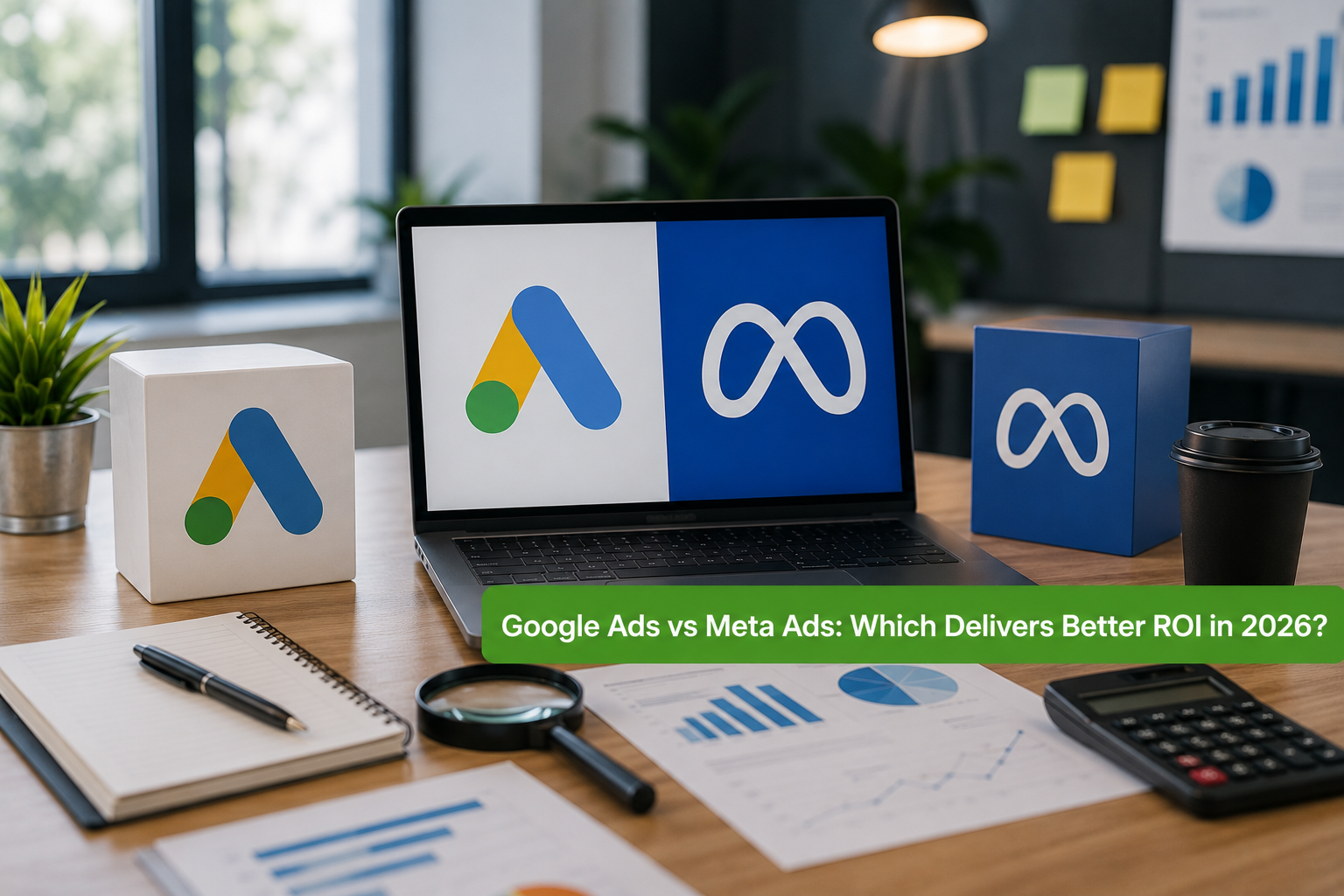
Digital advertising is evolving rapidly, making it more important than ever to invest in the right platform. Businesses looking to maximize returns often face one key question: Google Ads or Meta Ads—which platform delivers better ROI in 2026?
The answer depends on your audience, marketing objectives, industry, and buying journey. While Google Ads captures users with high purchase intent, Meta Ads excel at building brand awareness and demand through engaging visual campaigns.
As a Performance Marketing Agency for D2C & B2B Brands, KronoGrowth helps businesses develop data-driven advertising strategies that generate measurable growth. Whether you’re a D2C brand, an ecommerce company, or a B2B business, understanding the strengths of both advertising platforms is essential for maximizing your marketing investment.
In this guide, we’ll compare Google Ads and Meta Ads based on ROI, audience targeting, cost, conversion potential, and business goals to help you make an informed decision.
Google Ads vs Meta Ads: Understanding the Difference
Although both platforms help businesses reach potential customers, they serve different purposes.
Google Ads
Google Ads targets users actively searching for products or services. This makes it ideal for businesses looking to capture purchase-ready customers through Search, Shopping, Display, Performance Max, and YouTube campaigns.
Meta Ads
Meta Ads (Facebook and Instagram) focus on discovering new audiences through interest-based targeting. Instead of waiting for customers to search, Meta introduces your brand to potential buyers before they begin actively looking.
ROI Comparison: Google Ads vs Meta Ads
Google Ads ROI
Google Ads generally provides higher ROI for businesses where customers already know what they need.
Industries benefiting the most include:
- Healthcare
- Real Estate
- SaaS
- B2B Services
- Professional Services
- Local Businesses
Advantages include:
- High buying intent
- Faster lead generation
- Better conversion rates
- Measurable campaign performance
- Excellent local targeting
A Google Ads lead generation agency can optimize campaigns through keyword research, bidding strategies, landing page optimization, and conversion tracking.
Meta Ads ROI
Meta Ads are designed for businesses focused on demand generation and customer engagement.
Industries performing well include:
- Fashion
- Beauty
- D2C Brands
- FMCG
- Ecommerce
- Lifestyle Products
Benefits include:
- Lower cost per impression
- Advanced audience targeting
- Creative storytelling
- Remarketing opportunities
- Strong customer engagement
Many brands work with a D2C marketing agency to create compelling creatives that drive awareness and increase sales.
Audience Targeting Comparison
Google Ads
Google Ads targets customers based on:
- Search intent
- Keywords
- Location
- Device
- Demographics
- Customer lists
These users are already searching for a solution, resulting in higher purchase intent.
Meta Ads
Meta Ads target users through:
- Interests
- Behaviors
- Shopping habits
- Lookalike audiences
- Engagement history
- Custom audiences
This makes Meta ideal for creating demand and nurturing customers throughout the buying journey.
Cost Comparison
Advertising costs vary depending on industry competition.
Google Ads
Pros
- High-quality traffic
- Better lead quality
- Faster conversions
Cons
- Higher CPC
- Competitive industries increase costs
Meta Ads
Pros
- Lower CPC
- Affordable awareness campaigns
- Cost-effective retargeting
Cons
- Lower purchase intent
- Requires stronger creatives
Which Platform Works Best for Different Businesses?
Ecommerce Brands
Meta Ads excel at product discovery and customer engagement, while Google Shopping captures high-intent buyers.
An experienced e-commerce marketing agency often combines both platforms to maximize revenue.
D2C Brands
A Performance Marketing Agency for D2C & B2B Brands typically recommends Meta Ads for customer acquisition and Google Ads for remarketing and branded search campaigns.
This combination improves customer lifetime value while reducing acquisition costs.
B2B Companies
B2B businesses usually achieve stronger ROI through Google Search campaigns because decision-makers actively search for services.
A specialized B2B lead generation company can optimize campaigns for qualified leads instead of focusing solely on traffic.
Real Estate
Real estate businesses often benefit from combining Meta Lead Ads with Google Search campaigns.
Google captures active property buyers, while Meta generates awareness among future buyers.
Google Ads vs Meta Ads: Feature Comparison
|
Feature |
Google Ads |
Meta Ads |
|
Search Intent |
Excellent |
Moderate |
|
Brand Awareness |
Good |
Excellent |
|
Lead Generation |
Excellent |
Very Good |
|
Ecommerce Sales |
Excellent |
Excellent |
|
Remarketing |
Excellent |
Excellent |
|
Audience Discovery |
Moderate |
Excellent |
|
Creative Advertising |
Moderate |
Excellent |
|
Local Marketing |
Excellent |
Good |
Why Smart Businesses Use Both Platforms
Instead of choosing one platform, successful businesses integrate Google Ads and Meta Ads into a full-funnel marketing strategy.
Example:
Top Funnel
- Meta Ads introduce the brand.
Middle Funnel
- Remarketing campaigns build trust.
Bottom Funnel
- Google Search converts high-intent customers.
This integrated strategy consistently delivers stronger ROI than relying on a single advertising platform.
A trusted performance marketing agency can create this full-funnel approach while continuously optimizing campaigns for maximum profitability.
Best Practices to Improve ROI in 2026
Track Every Conversion
Use accurate conversion tracking to understand campaign performance.
Optimize Landing Pages
A well-designed landing page improves Quality Score and increases conversions.
Test Multiple Creatives
Refresh ad creatives regularly to avoid audience fatigue.
Build Strong Remarketing Campaigns
Reconnect with users who visited your website but didn’t convert.
Focus on Business Goals
Avoid optimizing only for clicks—prioritize leads, sales, and return on ad spend.
Common Mistakes Businesses Make
- Choosing one platform without testing both
- Ignoring remarketing campaigns
- Sending paid traffic to slow websites
- Not tracking conversions accurately
- Focusing only on CPC instead of ROI
- Using identical creatives for every audience
Frequently Asked Questions
Which platform delivers better ROI in 2026?
Google Ads generally performs better for high-intent searches, while Meta Ads excel at creating demand and increasing brand awareness. The best ROI often comes from using both strategically.
Are Meta Ads cheaper than Google Ads?
Meta Ads usually have a lower cost per click, but Google Ads often generate higher-quality leads due to stronger purchase intent.
Which platform is better for ecommerce?
Ecommerce businesses benefit from combining Meta Ads for customer discovery with Google Shopping campaigns for purchase-ready customers.
Is Google Ads better for B2B businesses?
Yes. Google Ads is highly effective for B2B lead generation because users actively search for business solutions.
Should businesses advertise on both platforms?
Absolutely. Using Google Ads and Meta Ads together creates a complete marketing funnel that improves customer acquisition and overall ROI.
Conclusion
Choosing between Google Ads and Meta Ads isn’t about selecting a winner—it’s about understanding where each platform fits within your marketing strategy. Google Ads captures customers actively searching for solutions, while Meta Ads builds awareness and drives engagement among new audiences. Businesses that combine both platforms often achieve stronger conversion rates, lower acquisition costs, and higher long-term returns.
As a Performance Marketing Agency for D2C & B2B Brands, KronoGrowth helps businesses design ROI-focused advertising strategies tailored to industries such as ecommerce, real estate, fashion, healthcare, and B2B services. From campaign planning and landing page optimization to conversion tracking and continuous performance improvement, our team focuses on delivering measurable business growth.
If you’re ready to maximize your advertising investment in 2026, connect with KronoGrowth and discover how a data-driven marketing strategy can accelerate your business growth.