WordPress vs Shopify
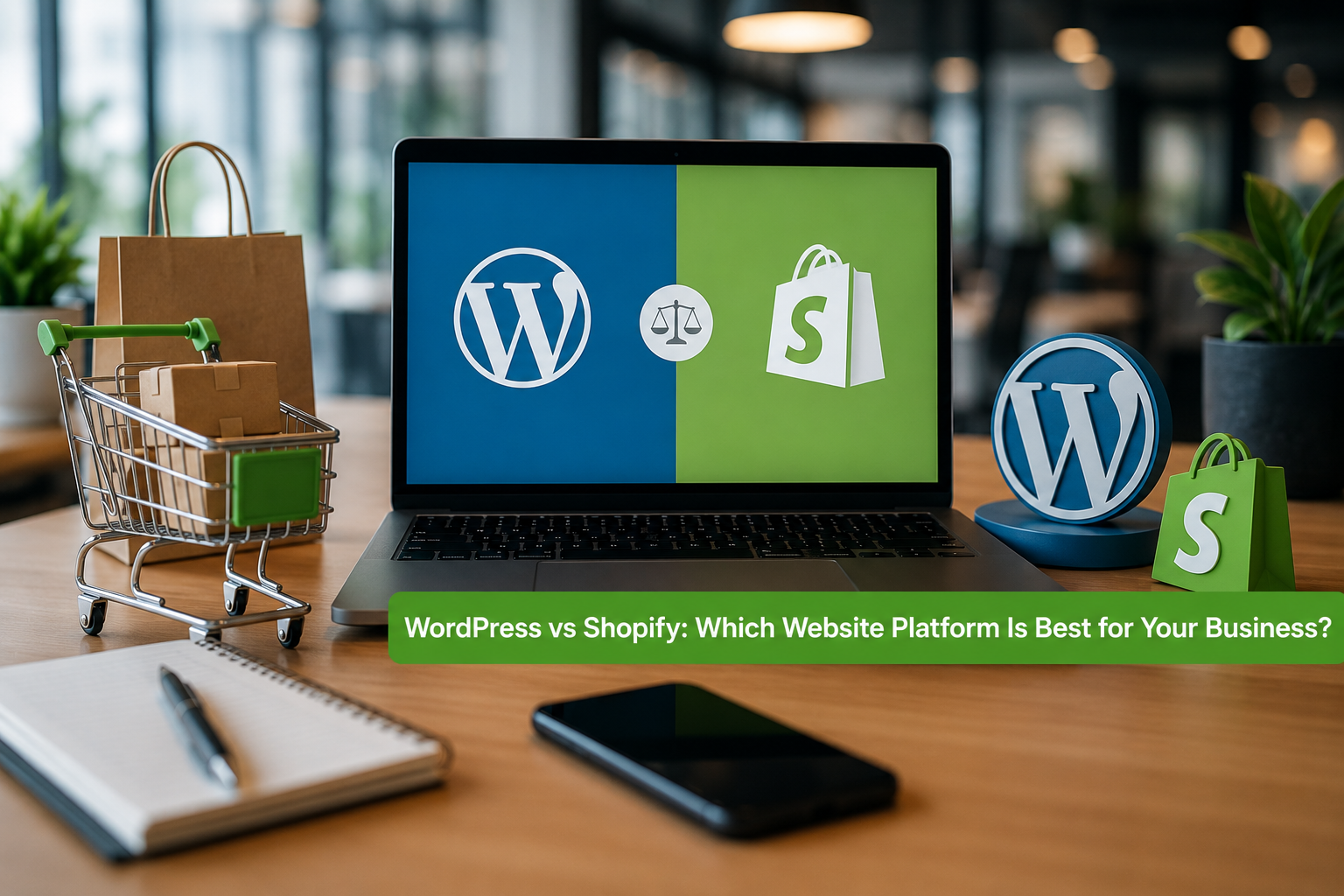
Building a business website today is easier than ever, but selecting the right platform is far from simple. Two names dominate the conversation—WordPress and Shopify. Both platforms offer powerful features, yet they serve different business goals. Understanding their strengths and limitations can save time, reduce development costs, and improve long-term growth.
While both WordPress and Shopify are popular platforms, they serve different business needs. Understanding their strengths, limitations, and scalability will help you make an informed decision.
At KronoGrowth, we not only build high-performing websites but also help businesses grow through data-driven marketing strategies as a trusted Performance Marketing Agency for D2C & B2B Brands. This guide compares WordPress and Shopify to help you choose the right platform for your business.
Why Choosing the Right Website Platform Matters
Your website is more than an online presence—it’s your digital storefront, lead generation tool, and brand experience.
The right platform helps you:
- Improve website speed
- Increase conversion rates
- Rank better on Google
- Simplify website management
- Scale your business efficiently
- Support future marketing campaigns
Businesses working with a performance marketing agency often achieve better results when their website is optimized for user experience and conversions.
What Is WordPress?
WordPress is a flexible content management system that allows businesses to build highly customized websites. It offers complete control over design, functionality, and SEO, making it suitable for service companies, corporate websites, blogs, and large-scale projects.
Best For
- Corporate websites
- Service businesses
- B2B companies
- Real estate businesses
- Healthcare websites
- Custom web development
- SEO-focused businesses
WordPress Advantages
- Complete design flexibility
- Thousands of plugins
- Excellent SEO capabilities
- Lower long-term costs
- Full ownership of your website
- Easy integration with marketing tools
A B2B lead generation company often recommends WordPress because it offers advanced customization for lead generation forms, landing pages, CRM integrations, and content marketing.
What Is Shopify?
Shopify is designed specifically for online selling. It simplifies store management with built-in payment gateways, inventory tools, shipping integrations, and secure checkout, allowing business owners to launch an online store quickly.
Best For
- Online stores
- D2C brands
- Fashion brands
- Beauty brands
- FMCG businesses
- Product-based startups
Shopify Advantages
- Quick setup
- Secure hosting
- Mobile-friendly themes
- Built-in payment gateway
- Easy inventory management
- Reliable technical support
A growing D2C marketing agency often recommends Shopify for brands focused on scaling online sales quickly.
WordPress vs Shopify: Feature Comparison
Ease of Use
WordPress
WordPress offers complete control but requires basic technical knowledge for hosting, plugin management, and updates.
Shopify
Shopify provides a beginner-friendly interface where users can launch an online store without technical experience.
Winner: Shopify for beginners.
Customization
WordPress offers unlimited customization with themes, plugins, and custom development.
Shopify offers professional themes but has more limitations compared to WordPress.
Winner: WordPress.
SEO Performance
SEO plays a crucial role in attracting organic traffic.
WordPress allows complete SEO optimization, including:
- Custom URLs
- Advanced schema
- Technical SEO
- Blog optimization
- Internal linking
- Plugin flexibility
Shopify includes built-in SEO features but provides less flexibility.
Businesses working with an ecommerce marketing agency often choose WordPress when SEO is a long-term priority.
Winner: WordPress.
Ecommerce Features
Shopify was built specifically for ecommerce.
It includes:
- Inventory management
- Product catalog
- Order tracking
- Secure checkout
- Shipping integrations
- Payment gateways
WordPress requires WooCommerce and additional plugins.
Winner: Shopify.
Scalability
Both platforms can scale successfully.
Choose WordPress if you need:
- Multiple business services
- Lead generation
- Blogging
- Corporate website
- Custom functionality
Choose Shopify if you focus mainly on ecommerce growth.
Website Speed
Website speed directly impacts user experience and SEO.
Shopify provides optimized hosting out of the box.
WordPress performance depends on hosting quality, caching, plugins, and optimization.
A professional Google Ads lead generation agency recommends optimizing website speed before investing heavily in paid campaigns.
Pricing Comparison
WordPress Costs
- Hosting
- Domain
- Premium theme (optional)
- Plugins
- Maintenance
Pricing varies depending on customization.
Shopify Costs
- Monthly subscription
- Premium themes
- Shopify Apps
- Transaction fees
Monthly costs remain predictable but increase with additional apps.
Which Platform Is Better for Different Businesses?
WordPress Is Best If You:
- Need a business website
- Publish blogs regularly
- Focus on SEO
- Generate B2B leads
- Want complete customization
- Plan long-term digital growth
Many businesses working with a B2B lead generation company prefer WordPress for creating high-converting landing pages and content-driven lead generation strategies.
Shopify Is Best If You:
- Sell physical products
- Need quick website launch
- Want simple inventory management
- Focus on ecommerce sales
- Require secure checkout
Many product-based brands partner with a D2C marketing agency to maximize Shopify sales through paid advertising and conversion optimization.
Common Mistakes Businesses Make
Avoid these common website mistakes:
- Choosing based only on price
- Ignoring future scalability
- Neglecting SEO requirements
- Using poor-quality hosting
- Installing unnecessary plugins
- Ignoring mobile optimization
- Overlooking conversion optimization
Your website should support both user experience and business growth.
How Website Development Supports Performance Marketing
Even the best marketing campaigns fail if your website doesn’t convert visitors.
A professional Performance Marketing Agency for D2C & B2B Brands understands that website development and marketing must work together.
A high-performing website should include:
- Fast loading speed
- Mobile responsiveness
- Clear CTAs
- Conversion-focused design
- SEO optimization
- Analytics integration
- Secure infrastructure
Whether you choose WordPress or Shopify, combining website development with a performance marketing agency ensures your marketing budget generates better results.
Why Businesses Choose KronoGrowth
At KronoGrowth, we build websites that are designed for business growth—not just visual appeal.
Our expertise includes:
- WordPress Website Development
- Shopify Store Development
- SEO Optimization
- Google Ads Management
- Meta Ads
- Conversion Rate Optimization
- Performance Marketing
- Lead Generation
Whether you’re launching a new business, upgrading your ecommerce store, or scaling a corporate website, our team creates digital solutions aligned with your business goals.
Frequently Asked Questions
Is WordPress better than Shopify?
It depends on your business goals. WordPress offers greater flexibility and SEO capabilities, while Shopify is ideal for businesses focused on ecommerce.
Which platform is better for SEO?
WordPress provides more advanced SEO customization and is generally preferred for businesses investing in long-term organic growth.
Is Shopify suitable for small businesses?
Yes. Shopify is an excellent choice for startups and small businesses that want to launch an online store quickly.
Which platform is more affordable?
WordPress can be more cost-effective over time, while Shopify has fixed monthly pricing with optional app costs.
Should I hire professionals to build my website?
Yes. Working with experienced website developers ensures better performance, security, SEO, and long-term scalability.
Conclusion
Both WordPress and Shopify are powerful platforms, but the right choice depends on your business model, growth plans, and marketing strategy.
If your priority is content marketing, SEO, and lead generation, WordPress offers unmatched flexibility. If your goal is to build and scale an online store quickly, Shopify provides an efficient ecommerce solution.
The most successful businesses combine a high-performing website with strategic digital marketing. Partnering with a Performance Marketing Agency for D2C & B2B Brands ensures your website supports lead generation, customer acquisition, and measurable business growth.